About AI4RISE Lab

A research group in the Department of Civil and Environmental Engineering at Kennesaw State University. We combine artificial intelligence, advanced materials and systems engineering to make civil infrastructure safer, more resilient and more environmentally efficient.
AI
Artificial Intelligence
4
for
R
Resilient
I
Infrastructure
S
System
E
Engineering

Our foundation

Mission, vision and research goal

Mission

01

AI4RISE Lab is dedicated to driving intelligent, resilient, and environmentally efficient infrastructure through artificial intelligence, advanced materials, and systems engineering. Our focus is on delivering practical, high-impact solutions that enhance structural performance, improve multi-hazard resilience, and minimize environmental impact.
Vision

02

Lead global innovation in resilient infrastructure engineering by harnessing AI, advanced materials, and systems engineering to create infrastructure systems that are smarter, safer, and more durable through interdisciplinary collaboration.

Research Goal

03

The overarching goal of AI4RISE Lab is to advance the resilience and adaptability of civil infrastructure systems under extreme events, such as earthquakes, floods, and climate-driven hazards, by synergistically integrating traditional engineering approaches (experimental investigations, analytical modeling, and high-fidelity numerical simulations) with advanced materials research and cutting-edge AI techniques (machine learning, deep learning, transfer learning, generative AI, physics-informed machine learning, explainable AI, and multi-objective optimization) within a systems engineering framework.

  • Engineering methods

    • Experimental investigations
    • Analytical modeling
    • High-fidelity numerical simulation
  • Advanced materials

    • Ultra-high-performance concrete
    • FRP and FRCM composites
    • Shape memory and titanium alloys
  • Artificial intelligence

    • Machine, deep and transfer learning
    • Physics-informed and explainable AI
    • Generative AI and multi-objective optimization

Systems engineering framework

Links data, models and decisions across the infrastructure life cycle

Resilient, adaptable infrastructure

Reliable performance under earthquakes, floods and climate-driven hazards, with environmentally efficient materials and designs

What we study

Research focus areas

Application areas that connect the research pillars to engineering practice.
  • 01

    AI-driven performance-based design

    Performance-based design frameworks, powered by AI and built on a systems engineering approach, that improve the efficiency and adaptability of structural systems.

  • 02

    Resilience and risk assessment

    Systems engineering frameworks and AI-driven analyses of multi-hazard scenarios that quantify vulnerabilities and guide risk-informed decisions.

  • 03

    Sustainable materials optimization

    Environmentally efficient materials and life-cycle strategies, optimized with AI-guided multi-objective algorithms without sacrificing durability or performance.

  • 04

    Decision support systems

    AI-enabled platforms, grounded in systems engineering, that help engineers and policymakers select materials, assess risks and plan resilient infrastructure under uncertainty.

  • 05

    Advanced retrofitting solutions

    Systems engineering methods and predictive analytics that evaluate FRP, FRCM, SRG, shape memory alloy and titanium alloy systems for strengthening and extending the life of existing infrastructure.

Milestones

Selected achievements

Research funding, scholarly impact and recognition. Citation and publication counts update automatically.

Research funding

  • $183K

    Research grant

    ITD Research Grant

    Multi-university study, funded by the Idaho Transportation Department, of protective overlays for Idaho’s bridge decks. The lab develops machine learning models of long-term overlay performance.

Scholarly impact

  • 2,299

    Google Scholar Citations

    Growing body of highly cited research across AI, structural engineering, and advanced materials.

  • 69

    Peer-Reviewed Publications

    Published in top-tier journals including Engineering Structures, Applied Soft Computing, and Composites Part B.

  • #1

    Most Popular in Applied Soft Computing since 2024

    Paper on confined UHPC stress-strain modeling recognized as the #1 most popular article in Applied Soft Computing (Elsevier).

Recognition

  • ASCE Chief Editor’s Choice

    Paper on seismic performance of metallic dissipaters selected as Chief Editor’s Choice by the ASCE Journal of Structural Engineering (Feb 2026).

  • 2025 ASCE ExCEEd Fellow

    Selected for ASCE’s ExCEEd program focused on advancing excellence in civil engineering education.

  • NEST Innovator, Fall 2025

    Received the Expanding the NEST Innovator award from Kennesaw State University for Fall 2025.

All awards and recognitions

People

Leadership and team

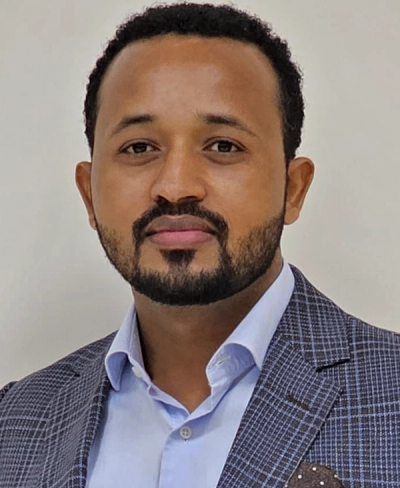
Dr. Tadesse G. Wakjira

Lab director

Dr. Tadesse G. Wakjira

Assistant Professor, Department of Civil and Environmental Engineering

Kennesaw State University, Georgia, USA

Dr. Wakjira leads AI4RISE Lab. His research combines explainable and physics-informed machine learning with advanced materials, performance-based seismic design and 3D computer vision to improve the safety, resilience and environmental efficiency of civil infrastructure.

Research team

PhD, MSc and undergraduate researchers work alongside faculty collaborators at partner universities and national laboratories.

9
Current researchers
8
Alumni
6
Collaborators

What drives us

Core values

  • Research excellence

    Rigorous methods, careful validation and reproducible results that advance civil and computational engineering.

  • Integrity and responsibility

    Ethical conduct, transparency and accountability in research, mentoring and professional practice.

  • Collaborative culture

    An inclusive, multidisciplinary group in which students, researchers and partners work together on real infrastructure problems.

  • Practical impact

    Research designed to inform engineering practice and agency decisions, leading to safer and longer-lasting infrastructure.

Partners

Collaborating institutions

Joint research with faculty and scientists at partner universities and national laboratories.
Meet our collaborators
  • Idaho State University
  • Idaho National Laboratory
  • Utah State University
  • Rowan University
  • Oak Ridge National Laboratory
  • East Texas A&M University
  • University of Central Florida